 AVNews24Desk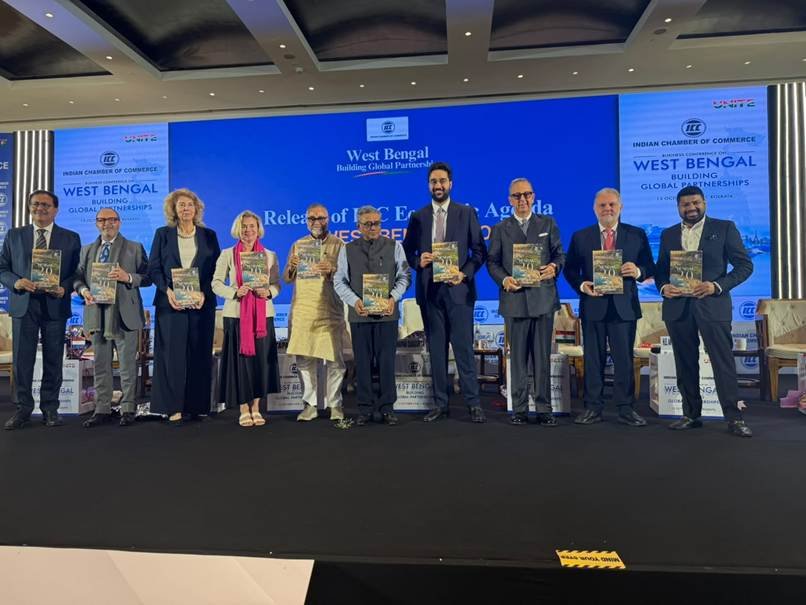
As India advances towards its ambition of a $7 trillion economy by 2030 and $30 trillion by 2047, ICC brings culture and commerce together to strengthen international partnerships and showcase Eastern India’s growth potential this Durga Puja.
Kolkata: The Indian Chamber of Commerce (ICC), under its new President Parthiv Neotia, hosted diplomats and heads of missions from 12 countries for a two-day programme in Kolkata. The event aimed to strengthen business ties, explore investment opportunities and promote international cooperation.
Parthiv Neotia, who recently took charge as ICC President, is also Managing Director of Ambuja Neotia – Healthcare.
The initiative supports India’s goal of becoming a $7 trillion economy by 2030 and a $30 trillion economy by 2047 under the vision of Viksit Bharat. Eastern India has strong potential in infrastructure, manufacturing, technology, tourism and services. The programme brought together international representatives for business discussions and an experience of Bengal’s Durga Puja celebrations.
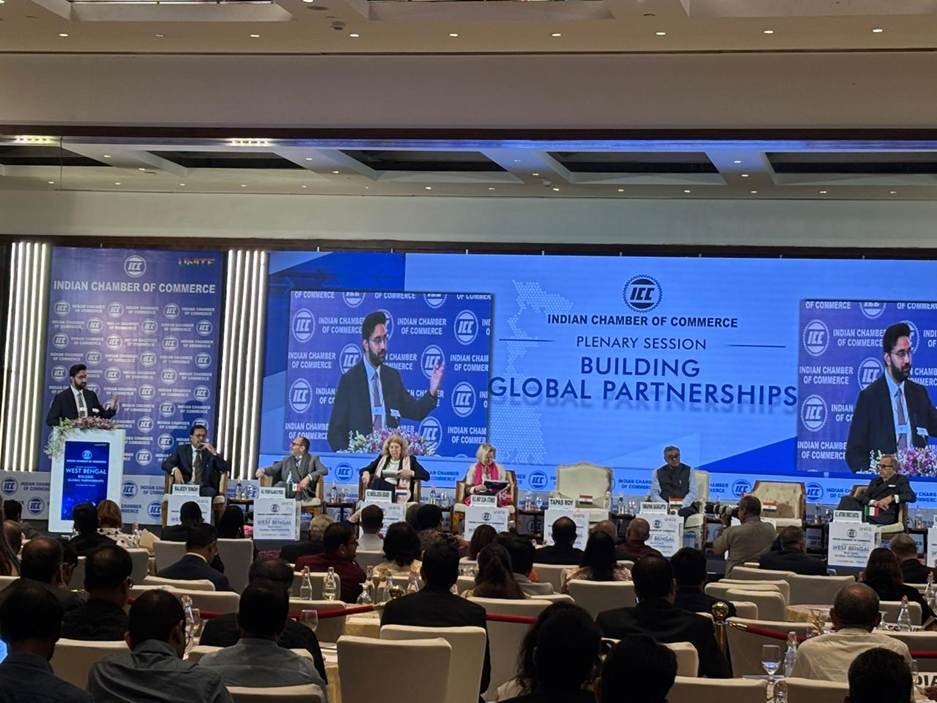
Representatives from Germany, Australia, Mexico, the Netherlands, Norway, Italy, Thailand, Cyprus, Kenya, Sri Lanka, Malaysia and Indonesia took part in discussions on trade, investment and cooperation.
The programme also reflects ICC’s theme, ‘UNITE’, introduced by Neotia after taking charge as President. It aims to connect businesses, institutions, governments and international partners to create more opportunities for India’s economic growth.
Welcoming the delegates, Parthiv Neotia said, “As we work towards the vision of Viksit Bharat, international collaborations can help Indian businesses reach new markets, strengthen manufacturing, adopt new technologies, and participate more meaningfully in global value chains. Collaborations can also create opportunities for learning, innovation, and employment alike.”
He added that West Bengal’s location near the Bay of Bengal and its links with South and Southeast Asia give it the potential to serve as India’s eastern gateway. The state’s ports, transport network, industries, skilled workforce and access to neighbouring markets can support stronger international business ties. He also said Durga Puja offered an opportunity to introduce international guests to Bengal’s culture and creativity.
West Bengal Finance Minister Dr. Swapan Dasgupta said India had made significant progress in transforming its economy over the past decade. He added that the state was working to create an open economy with opportunities for both local people and national and international investors.
State Minister Tapas Roy said the government was promoting modern industries through faster approvals, investment incentives, easier business processes and a GIS-based industrial land bank. Key sectors include engineering, steel, chemicals, semiconductors and IT, along with traditional industries. He also highlighted efforts to support exports and startups and generate employment.
During the programme, ICC released Bengal 2.0: From Here to Eternity, a book exploring West Bengal’s economic journey and outlining a roadmap for growth. It highlights the state’s MSME network, agriculture, ports, skilled workforce and strategic location as key strengths. The book also stresses the importance of a supportive investment environment and coordination between the state and central governments.
After the business discussions, the visiting delegates toured selected Durga Puja pandals in Kolkata, experiencing one of Bengal’s most important cultural celebrations.