
 AVNews24Desk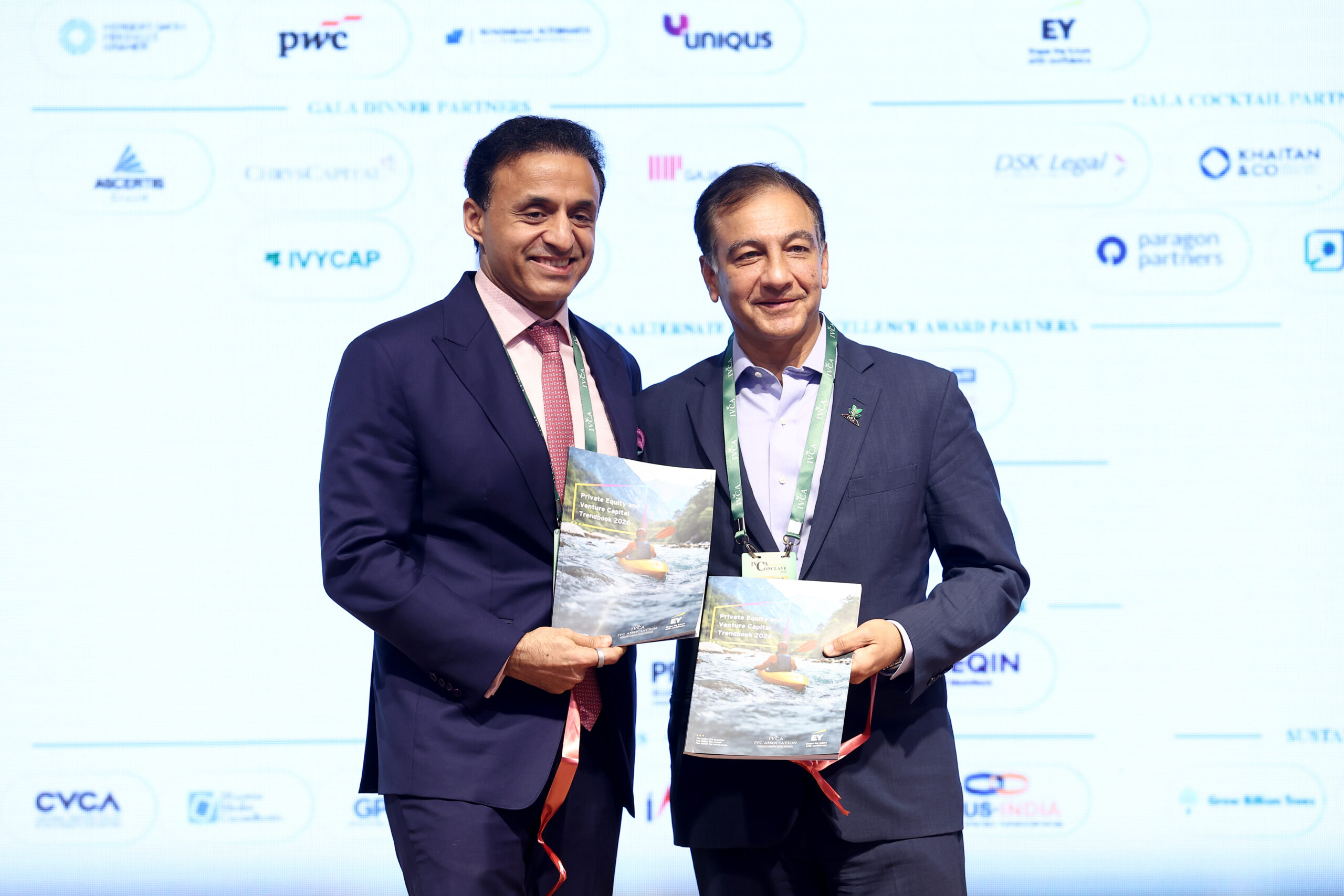
Mumbai: India’s private equity and venture capital (PE/VC) industry continued to grow strongly in 2025 despite global economic uncertainty. According to the EY–IVCA PE/VC Agenda: India Trendbook 2026, total PE/VC investments reached US$60.7 billion across 1,475 deals, marking an 8% increase in value and a 9% rise in deal volume compared to the previous year. The report was released at the 15th edition of the IVCA Conclave 2026 in Mumbai. It highlights that India’s investment ecosystem remains strong and resilient even during a challenging global environment. At the same time, fundraising activity reached a record high of US$23.2 billion in 2025, showing strong confidence among investors.
According to Vivek Soni, Partner and National Leader for Private Equity Services at EY India, the year 2025 showed the growing maturity of India’s PE/VC market. However, investor sentiment was influenced by several global and domestic factors, including political developments in India, the environment after the US elections, geopolitical tensions, and changing tariff policies in the US. Inflation management steps by the Reserve Bank of India (RBI) and the weakening rupee also made investors more cautious while deploying capital.
Looking ahead to 2026, experts believe that India’s PE/VC activity will be influenced by geopolitical developments, domestic policy changes, and valuation adjustments in the market. In the short term, investors are expected to adopt a “wait and watch” approach while assessing market stability and earnings growth. Global issues such as the Iran–Israel–US conflict and its impact on energy prices may also influence investment decisions. However, the medium-to-long-term outlook for India remains positive because of strong economic fundamentals, a growing corporate ecosystem, and continued interest from global investors.
The report also highlights strong investment activity across sectors. Financial services, infrastructure, real estate, technology and e-commerce together accounted for 72% of total investments in 2025. Financial services became the largest sector, overtaking infrastructure. Several sectors including financial services, real estate, food and agriculture, automotive, industrial products, and aerospace and defence also recorded their highest-ever investment levels.
In terms of investment types, growth investments increased significantly, while the start-up segment also saw steady growth. PE/VC exits also continued to rise for the third consecutive year, reaching US$32.9 billion across 257 exits. Strategic exits grew sharply and accounted for nearly 48% of total exits, reflecting strong market activity.
Despite these positive trends, some challenges could slow investment in 2026. Policy uncertainties, especially around US tariffs on Indian exports, fluctuations in equity markets after changes in Securities Transaction Tax (STT), and global geopolitical tensions may influence investor confidence. The weakening rupee and differences between buyer and seller valuation expectations are also delaying some deals.
However, India’s economic fundamentals remain strong. The country’s GDP is expected to grow around 7%, making it one of the fastest-growing major economies in the world. Lower inflation, supportive monetary policies by the RBI, and the government’s continued focus on infrastructure spending are expected to create a favourable environment for investments. Together, these factors indicate that India’s PE/VC industry is likely to remain strong and attractive for investors in 2026 and beyond.